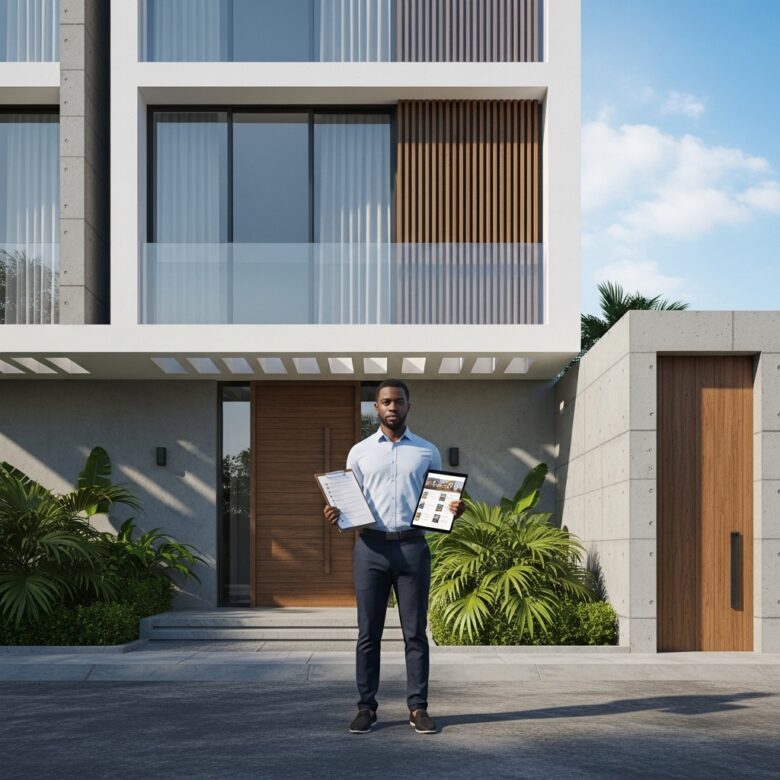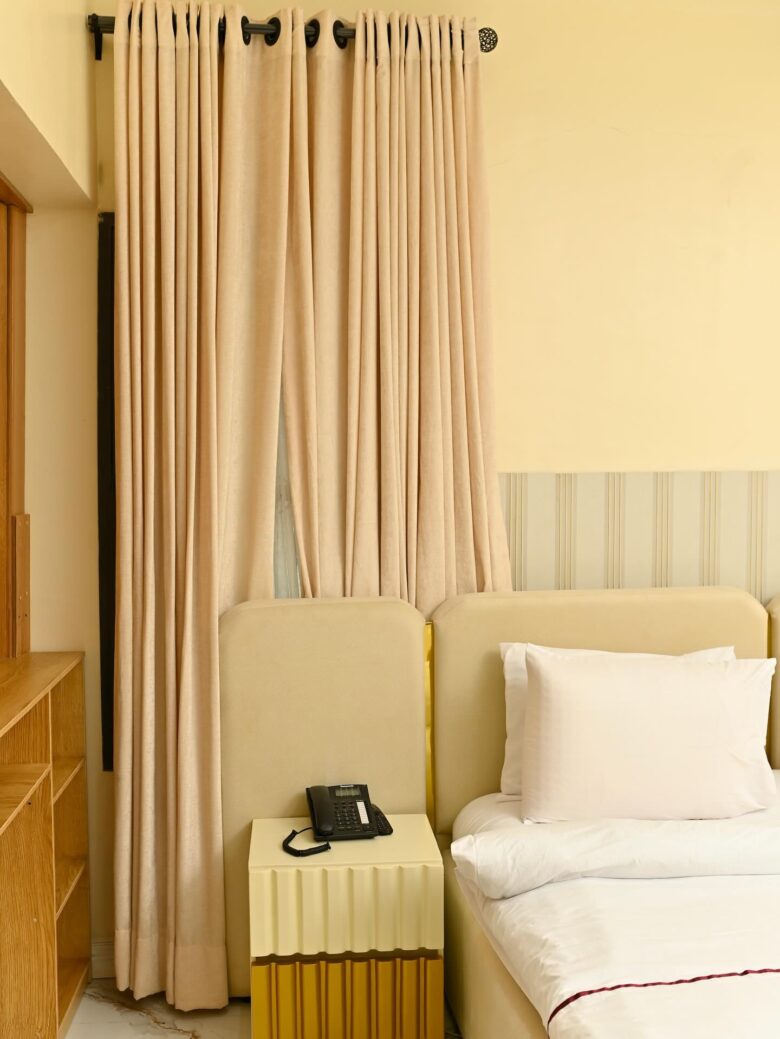
Hey guys! So let me tell you a story that happened to my guy Chinedu last year. This brother had just gotten a new job at one of those big companies on Victoria Island – you know the type, the ones where they pay you serious money and you start feeling like you’ve arrived. The first thing Chinedu did was tell himself, “I can’t be living in Ikeja anymore and working on the Island. Let me relocate to where the big boys stay.”
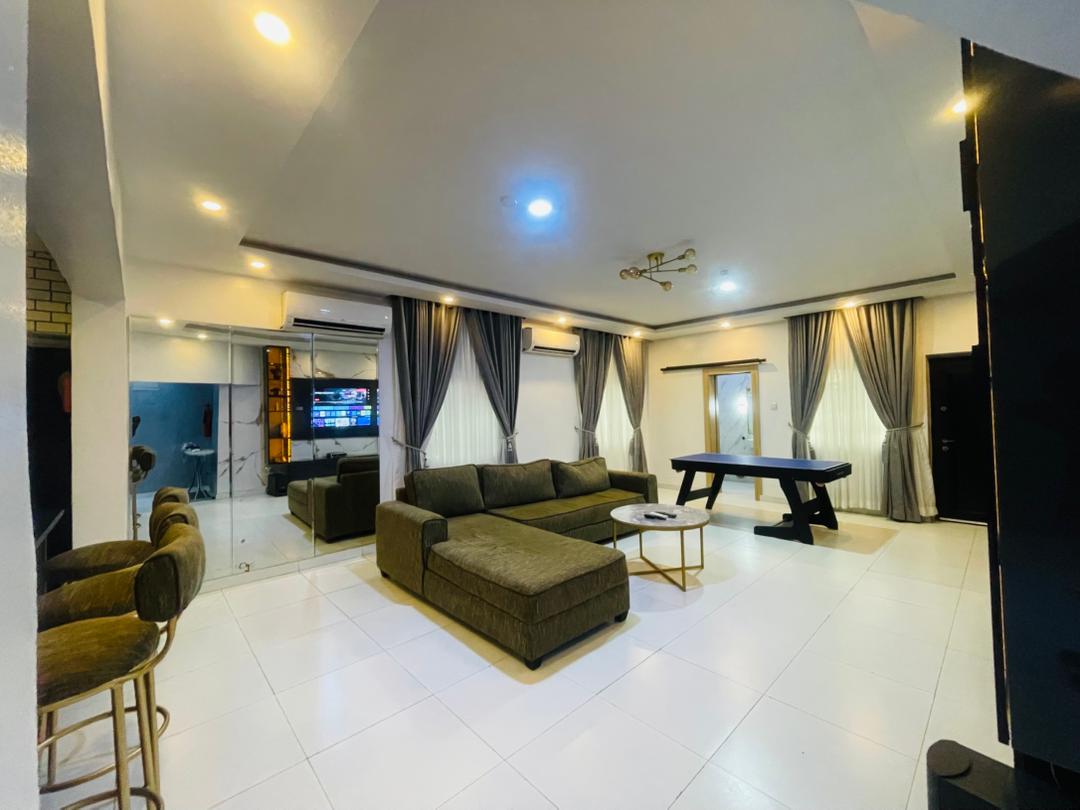
So he started looking online, saw some beautiful pictures of flats in that premium area between VI and Ajah, got the agent’s number, and boom – within two weeks, he had paid for a 2-bedroom flat. The guy was so excited, already planning how he’d invite us for housewarming. Fast forward to moving day, and my guy almost fainted. The apartment looked nothing like the pictures! The generator only came on for 3 hours at night, the estate security was just one old man sleeping at the gate, and to crown it all, the neighborhood flooded whenever rain fell for more than 30 minutes.
Chinedu spent his first six months there in regret, counting down to when his rent would expire. And that’s when I decided – let me write this comprehensive guide for anyone looking to rent a place in one of Lagos’s most desirable neighborhoods. Because honestly, apartment hunting in this area is like navigating a minefield if you don’t know what you’re doing. But when you do it right? Ah, it can be the best decision you’ll ever make.
First Things First: Let’s Talk About Your Weekend Plans
Before we even get into rent prices and agent fees, let me ask you something – what do you like to do for fun? Because one of the most underrated reasons people love living in this upscale area is the lifestyle. I’m not just talking about having a nice apartment; I’m talking about what you can do when you step outside your door.
You have places like Upbeat Recreational Centre on Admiralty Road, which is home to West Africa’s first trampoline park. Yes, you read that right – you can literally jump around like a kid again after a stressful week at work. Then there’s Fun Factory, also located on Admiralty Way, with outdoor slides, rides, a small pool, and space for kids to run around. Entrance typically costs around ₦3,000 per person for full access.
For those of you who prefer nature, the Lekki Conservation Centre is just a short drive away. This place has a canopy walk, nature trails, and you can see monkeys, crocodiles, peacocks, and even a 95-year-old tortoise! It’s perfect for those Saturdays when you just want to disconnect from the city chaos and breathe some fresh air.
And the nightlife? My people, this is where Lagos really shows up. You have spots like 34.26 Lounge, Red BAR on Wole Olateju Crescent, The BLVD, Medusa Lagos, and Bay Rock Lounge. These aren’t your regular Lagos clubs where you’re dodging fights every five minutes. These are classy places where you can actually have a conversation, enjoy good music, and feel safe. Entry fees typically range from ₦5,000 to ₦10,000 per person, but the experience is worth every kobo.
The Shopping Game That Will Empty Your Account (In a Good Way)
Let’s be honest – one of the reasons people move to this area is because of the shopping experience. You have The Palms Shopping Mall, which is probably the most popular spot. This place has everything from retail stores to cinemas to restaurants. Then there’s Circle Mall, Centro Mall, Season One Mall, and Lennox Mall. Some of these malls are purely for shopping, while others like The Palms offer a complete entertainment package with game centers and movie theaters showing both 2D and 3D films.
Movie tickets typically cost around ₦3,000 to ₦5,000, and trust me, after a long week of work, catching a movie at Filmhouse IMAX is one of those small joys that make life better.
Now Let’s Get Into The Real Gist: Finding Your Perfect Flat
Okay, so you’ve decided you want to move to this area. You’re sold on the lifestyle, the convenience, the vibes. But how do you actually find a good apartment without falling into the many traps that await unsuspecting house hunters in Lagos? Let me break it down for you step by step.
Step 1: Know Your Budget (And I Mean REALLY Know It)
Here’s where most people mess up. They see “₦5 million per year” online and think, “Okay, I can afford that.” Wrong! That ₦5 million is just the beginning of your financial journey. Let me show you how it typically works:
Let’s say you find a 2-bedroom flat for ₦5 million per year. Here’s what you’ll actually pay:
- Annual Rent: ₦5,000,000
- Agency Fee (10%): ₦500,000
- Legal Fee (10%): ₦500,000
- Caution Deposit (10%): ₦500,000
- Service Charge: ₦1,500,000 to ₦2,500,000 per year
So that ₦5 million apartment is actually costing you ₦8 million to ₦8.5 million for the first year. And every subsequent year, you’ll pay rent plus service charge, which means ₦6.5 million to ₦7.5 million. Do you see the maths now?
Many first-time renters overlook these additional fees and find themselves short on funds when it’s time to pay. Budget at least 20-30% above the actual rent to be safe. This is Lagos; there’s always something extra to pay.
Step 2: Choose Your Sub-Location Wisely
Not everywhere in this general area is the same, and that’s actually good news because it means you can find something that fits your budget and lifestyle. Let me break down the different sub-areas:
Ikate (Ikate Elegushi): This is the luxury section with beautiful modern buildings. The ambiance here screams money. Good roads, excellent security, and reliable power supply. A 2-bedroom will cost you ₦4 million to ₦8 million per year to rent, while buying will set you back ₦160 million to ₦180 million.
Agungi: A bit more serene and residential, with estates like Northern Foreshore, Friends Colony, and Victory Park Estate featuring top-notch security. Rent ranges from ₦550,000 to ₦7 million per year depending on the type of property.
Ikota: This one is divided into two sections – one for the affluent and one for people with smaller budgets. A 2-bedroom flat ranges from ₦3 million to ₦4.7 million per year. So if you want to live in the general neighborhood but can’t afford the premium areas, Ikota might be your entry point.
Step 3: The Physical Inspection (This Is Where Champions Are Made)
Now listen to me very carefully. I don’t care how beautiful the pictures look online, how convincing the agent sounds, or how many promises they make – DO NOT PAY FOR ANY APARTMENT WITHOUT PHYSICALLY INSPECTING IT YOURSELF. I repeat: DO. NOT. PAY. WITHOUT. SEEING. IT.
Many agents share outdated, misleading pictures, or sometimes show a completely different apartment from what’s available. Don’t be that person who pays based on photos and videos only to arrive and meet your Waterloo.
When you go for inspection, here’s your checklist:
Visit At Different Times of Day: Go there in the morning during rush hour, in the afternoon, and in the evening. This will show you the true traffic situation, noise levels, and security at different times. Visit at night and on weekends when noise peaks – that quiet neighborhood might turn into a nightclub at 10 PM.
Check For Flood Signs: Lagos and flooding are like 5&6. Look for water lines on the walls, ask about drainage systems, and if possible, visit during rainy season. Some houses look great in dry season but become mini rivers when it rains. The ground floor of a building in a flood-prone area? That’s a hard pass.
Test Everything: Turn on every tap, flush every toilet, check every AC unit, test the sockets, open the windows, check for ventilation. Some apartments are built like caves with no airflow, no windows, just heat and darkness. You don’t want to discover on moving day that nothing works properly.
Talk To Current Residents: This is perhaps the most important step. Find someone who lives in the building or estate and ask them about their experience. How’s the landlord? How often does NEPA bring light? Is the security actually serious or just for show? Does the area flood? Are there any hidden problems? People will tell you the truth – Lagos people love to gist.
Step 4: Understanding The Power Situation
Let me be straight with you – power supply in Lagos is unpredictable even in premium areas. However, this neighborhood generally enjoys better electricity compared to other parts of Lagos. But “better” is relative.
Some estates have 24-hour power supply through a combination of NEPA, generators, and solar systems. The service charge you pay usually covers this. Other places might have 12-16 hours of NEPA daily, which is actually good by Lagos standards. And then some buildings rely heavily on generators.
Here’s what you need to confirm:
- How many hours of NEPA power does the area typically get?
- Is there a generator backup, and is it included in the service charge?
- Do you have a prepaid meter or estimated billing?
- What’s the generator schedule if there’s one?
Always ask if the apartment has a prepaid meter as it gives you better control over consumption and protects you from those outrageous estimated bills that NEPA loves to send.
Step 5: Security Checks (Because Lagos Is Still Lagos)
One major selling point of this area is security, but you still need to verify this yourself. Check for burglary proofs on windows and doors, gated residences, gated estates with security, and proximity to a police station.
Ask these questions:
- Is there 24/7 security, or just during the day?
- Are there CCTV cameras, and do they actually work?
- What’s the access control system like?
- Have there been any security incidents recently?
- Is the neighborhood well-lit at night?
If you see lots of security wire and high fences, ask why. Sometimes excessive security measures tell you something about the area that the agent won’t mention.
The Agent Situation: Navigating Lagos’s Most Dangerous Waters
Ah, real estate agents in Lagos. This topic alone deserves its own blog post, but let me give you the survival guide version.
Many Lagos agents care more about their commission than your comfort. This doesn’t mean all agents are bad – there are some genuinely good ones. But you need to be smart about how you deal with them.
Work With Reputable Agents: Ask for referrals from people you trust. Check online reviews. Look for agents with physical offices you can visit. Working with credible agents who have traceable locations is important. If an agent only has a phone number and no office, that’s a red flag.
Don’t Let Them Rush You: “This apartment will be gone by tomorrow” is the oldest trick in the book. Taking it slow and steady makes the journey easier. If they’re pressuring you to pay immediately, be very suspicious.
Ask All The Questions: Don’t be shy. Ask about everything – rent increases, maintenance policies, landlord’s character, neighborhood issues, hidden fees. Ask questions, inspect thoroughly, and don’t let pressure make you settle for less.
Never Pay Without A Signed Agreement: Never hand over money without a tenancy agreement signed by both you and the landlord, not just the agent. This document protects you in case of disputes.
Pay Through Traceable Means: Avoid cash payments and pay via transfer with a clear reference. This creates a paper trail that protects you.
The Landlord Factor: Why This Matters More Than You Think
Your relationship with your landlord can make or break your living experience. Some landlords are wonderful – understanding, responsive, and fair. Others will make you regret the day you signed that agreement.
In Lagos state, some landlords increase rent how they feel, not bothered about their tenants. Before you pay, ask about the rent increase policy. Is there a fixed percentage? How often does rent increase? Get this in writing in your tenancy agreement.
Also, find out who handles maintenance issues. If the AC spoils, who pays for repairs? If the plumbing needs fixing, whose responsibility is it? These things matter because in Lagos, some landlords will tell you to fix everything yourself even though you’re paying rent.
If possible, avoid living in the same compound or building with your landlord. Trust me on this one. When your landlord is always watching, always commenting, always involved in your daily life, it gets suffocating. Distance helps maintain a healthy tenant-landlord relationship.
Understanding The Tenancy Agreement (Don’t Skip This Part!)
The tenancy agreement is your Bible, your constitution, your protection. Yet so many people just sign it without reading because they’re excited to move in. Don’t be that person.
The tenancy agreement outlines the terms and conditions of renting and forms the basis of the tenant-landlord relationship. Here’s what you must confirm:
Duration of Tenancy: How long is the rent for? One year? Two years? When exactly does it start and end?
Payment Terms: What are the accepted payment methods? Are there penalties for late payment? What’s the grace period?
Rent Increase Policy: By how much can rent increase? How often? What notice period must be given?
Maintenance Responsibilities: Who pays for what repairs? What’s the process for reporting issues?
Rules and Restrictions: Are there rules about guests, pets, generator use, cooking gas, parking? Some landlords impose rules like no pets, no visitors after 8 PM, or mandatory generator switch-off times.
Notice Period: How much notice do you need to give if you want to leave? How much notice will the landlord give if they want you to leave?
Read everything carefully. If anything is unclear or unfair, ask questions or consult someone with legal knowledge before signing.
The Truth About Service Charges Nobody Tells You
Service charges can be a source of serious headache if you don’t understand what you’re paying for. These charges typically cover:
- Estate security
- Maintenance of common areas
- Waste management
- Sometimes electricity for common areas and generators
- Water supply (in some cases)
The problem is that service charges can range from ₦1 million to ₦2.5 million per year or even more in some luxury estates. And here’s the kicker – they can increase annually without much warning.
Before you pay, get a clear breakdown of what the service charge covers. Ask if it’s fixed or if it increases yearly. Find out who manages these funds and what happens if services aren’t delivered as promised. Some estates have residents’ associations that help monitor how service charges are used – that’s usually a good sign.
Location and Commute: The Make-or-Break Factor
One of the biggest reasons people move to this area is the proximity to work, especially if you work on Victoria Island or Ikoyi. The commute can be 15-30 minutes on a good day, maybe 45 minutes to an hour during peak traffic.
But here’s what you need to do: Take the time to commute to your work or school during rush hour before you commit to renting. Do this test run on a weekday morning between 7-9 AM and again in the evening between 5-7 PM. This will give you the real picture of what your daily commute will be like.
If you don’t have a car, confirm public transportation options. Are there buses, keke, or bikes nearby? A cheap rent in a remote area often leads to higher monthly transport costs.
Also consider your weekend movements. Do you have family in another part of Lagos you visit often? Do you attend church or mosque elsewhere? Calculate the total transportation costs and time for all your regular movements.
The Amenities Check: Making Sure You Have What You Need
The location should not just be about peace – think about access to essential resources. Before you move in, confirm that the area has:
Markets and Shopping: Where’s the nearest market for fresh food? Are there supermarkets nearby?
Healthcare: Where’s the nearest hospital or clinic? In emergencies, how quickly can you get medical attention?
Schools: If you have children or plan to, are there good schools within reasonable distance?
Banks and ATMs: Where are the nearest banks for physical banking needs?
Worship Centers: If you’re religious, is there a church or mosque nearby?
Restaurants and Eateries: Where can you buy food when you don’t feel like cooking?
Having these amenities close by doesn’t just save time – it saves money and stress.
The Dos and Don’ts I Wish Someone Had Told Me
DO:
- Visit the property at least twice before paying
- Talk to multiple current tenants
- Take videos and pictures during inspection for reference
- Read the tenancy agreement from beginning to end
- Budget 30% above the rent for extra costs
- Check flood history and drainage systems
- Verify the landlord’s ownership of the property
- Get receipts for every payment you make
- Keep copies of all documents
DON’T:
- Pay based on pictures alone
- Wire money to someone you haven’t met in person
- Sign agreements without reading them
- Rush because the agent says someone else wants it
- Pay without getting a signed tenancy agreement
- Believe everything the agent tells you without verification
- Move in without testing all facilities
- Forget to check the neighborhood at night
- Ignore red flags because you’re desperate
Common Scams To Watch Out For
Lagos has its fair share of fraudsters, and the real estate sector is one of their favorite hunting grounds. Be wary of listings that seem too good to be true, with low rent and high-end amenities.
Check for typos, grammatical errors, and vague descriptions as these are often signs of a scam. If the listing has professional pictures but no address or contact information, that’s suspicious.
Never pay for an uncompleted house – make sure the apartment is ready before payment. Some fraudsters will show you a property under construction, promise it’ll be ready in a month, collect your money, and disappear.
If something feels off, walk away – there are always other apartments. Trust your instincts. If the agent is too pushy, if the deal sounds impossibly good, if something doesn’t add up, just walk away. Better safe than scammed.
Special Considerations For Different Groups
For Young Professionals: You probably want something modern, close to work, with good internet, and near entertainment spots. Consider shared apartments or 1-2 bedroom flats in the less expensive sub-areas like parts of Ikota.
For Families: You need more space, proximity to good schools, secure neighborhoods, and child-friendly facilities. Look at 3-4 bedroom apartments or duplexes in family-oriented estates with playgrounds and recreational facilities.
For Expatriates: You might need fully serviced apartments with 24-hour power, security, housekeeping, and maintenance services. These cost more but offer the convenience you’re used to. Many estates specifically cater to expatriates.
For Remote Workers: Reliable internet and 24-hour power are non-negotiable for you. Ask about internet service providers in the area and confirm power supply patterns before committing.
Making The Final Decision
After all the inspections, questions, and research, how do you finally decide? Here’s my advice: create a scorecard. List all the factors that matter to you – location, price, security, amenities, power supply, landlord reputation, apartment condition, estate facilities – and rate each property you’ve seen.
Also, trust your gut feeling. If everything checks out on paper but something feels off when you’re in the apartment or talking to the landlord, pay attention to that feeling. You’ll be living there for at least a year; make sure it feels right.
After You’ve Moved In: First Week Checklist
Congratulations! You’ve successfully navigated the apartment hunting jungle and moved in. Here’s what to do in your first week:
- Take pictures and videos of everything – the condition of walls, floors, fixtures, appliances. This protects you when you’re moving out.
- Test all appliances and report any issues immediately
- Introduce yourself to neighbors – they’re your allies in the building
- Locate the nearest police station, hospital, fire station
- Register with the estate association if there is one
- Set up your utility accounts (internet, cable TV)
- Change the locks if possible (with landlord’s permission)
- Get familiar with the neighborhood – where to buy food, where to eat, where to hang out
In Conclusion: Is It Worth It?
After everything I’ve told you, you might be wondering – is moving to this upscale part of Lagos really worth all this stress and expense?
For many people, the answer is a resounding yes. The time saved on commuting alone is priceless. The security, the amenities, the lifestyle, the peace of mind – these things add value to your life in ways that transcend money.
But here’s the thing: it has to make sense for YOUR specific situation. If you’re stretching your finances so thin that you can’t enjoy life, it’s not worth it. If you’ll be spending every weekend at home because you can’t afford to go out after paying rent, it’s not worth it. If the stress of maintaining your lifestyle here is more than the benefits, it’s not worth it.
However, if you can comfortably afford it, if it significantly improves your quality of life, if it positions you closer to opportunities, if it gives you back hours of your day that you were losing to traffic, then yes – it’s absolutely worth it.
The key is to do your homework, avoid the pitfalls, work with honest people, and make an informed decision that aligns with your financial reality and life goals.
Remember Chinedu from the beginning of this story? Well, after his bad experience, he eventually moved to a different property in the same general area. But this time, he did everything right – thorough inspection, talked to residents, read the agreement carefully, worked with a reputable agent. He’s been there for two years now and couldn’t be happier. The difference? Knowledge and proper preparation.
And that’s exactly what I hope this guide gives you – the knowledge and preparation you need to find your perfect home in one of Lagos’s most desirable neighborhoods without losing your mind or your money in the process.